

cctvfinderLoading the 3D view

The right CCTV camera. In seconds.

Tell us how far away the spot is, how high the camera should hang and what you want to make out there. That is all it takes. You see in 3D what really arrives at that spot, calculated to DIN EN 62676-4. And then, beside it, which models can manage it.

Discover more

Why it matters

Most systems do not fail on the technology.

They fail because nobody worked out beforehand what arrives at the target. Only once something has happened does anyone look at the recording. By then it is too late to plan differently.

Money spent on cameras that cannot do it

Out of more than a hundred systems assessed: over four in five did not deliver what they had been bought for. Usually the camera hung too far away or the lens was too wide. Neither is visible on a data sheet. Both are visible here, before you buy.
The same camera, two completely different pictures

A camera at the gate sees something different from the same camera on the fence behind it. Resolution, lens and distance belong together, and only together do they say anything. That is what we work out for your spot.

A number you can point to

DIN EN 62676-4 translates every task into pixels per metre. Tenders are written to this standard, and in the event of a claim an expert checks the sums against it. We calculate to it too.

Starting is this simple

Three values. One clear answer.

Two of them you get with a tape measure or from the site plan. For the third you decide what the camera has to achieve. The rest is ours.

Surveillance quality, distance and mounting height.
Nothing else.

The cctvfinder takes care of everything after that.

Three values and a few seconds of your time.

After that the screen tells you which camera manages your spot.

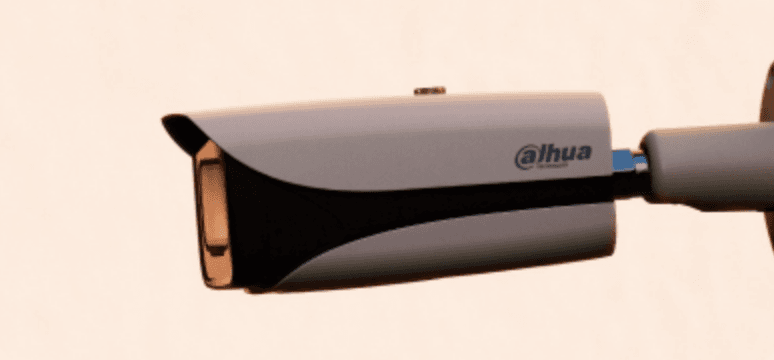
A bullet CCTV camera on a wall mount, seen from the side.

Calculated to DIN EN 62676-4.

Because we know how it is done.

Find CCTV cameras in a few clicks.

Instead of spending hours reading data sheets.

New: the 3D view

See your camera before it goes up.

Put the camera in a yard, a warehouse or in front of a shop entrance, drag it to its position and look. What you see is no preview and no simulation: it is exactly as many pixels as your camera delivers at that spot. If a face turns to mush there, it will turn to mush on the recording later.

Pull the distance slider a little to the right and you see what one metre does. Sometimes it is nothing. Sometimes it is the difference between “someone was there” and “that was this man”.

Quality levels of the standardpx/m

  • Monitor12,5 Px/m
  • Detect25 Px/m
  • Observe62,5 Px/m
  • Recognise125 Px/m
  • Identify250 Px/m

To recognise a person you already know, the standard asks for 125 px/m; to identify a stranger, 250 px/m.

And which camera now?

The arithmetic is the easy part.

Working out the pixel density takes a minute. After that you sit in front of thirty data sheets looking for the model that actually reaches that figure. Field of view, sensor, resolution, focal length, every sheet laid out differently. This is exactly where every other tool stops.

Real models, not a sample camera

The catalogue holds 26 models from Avigilon, AXIS, Bosch, Hanwha Vision, Hikvision, Reolink. The figures come from the manufacturers’ data sheets, field of view and resolution as the manufacturer measures them.

Sorted for your spot

Every model is calculated against your distance, your height and your object width. What meets the task stands at the top. What does not meet it is listed too, with the reason beside it.

We sell none of them

No manufacturer pays for a place in this list, and there is no button to buy. The order follows from the calculation and from nothing else.

Request a quote

Rather have it planned for you? We can do that.

Some sites have more corners than three sliders can show. Then just describe it to us. We will look at it and come back with an assessment of the surveillance quality your project actually needs.

  • A personal reply. We talk your project through with you directly, with no ticket queue in between.
  • To DIN EN 62676-4. We tell you which quality level your site needs, and we tell you why.
  • No manufacturer behind us. We do not sell cameras. We pick the one that fits your spot.
What do you want to protect?
When should it start?

Takes under a minute.

What the calculation rests on.

Behind the tool are years spent in real buildings: planning systems, assessing systems, reading data sheets and measuring how much of them holds.

DIN EN 62676-4basis of the calculation
3Dview before mounting
px/mevery figure checkable
6quality levels covered

How it goes

Three steps. Done.

  1. Enter three values. How far away the spot is, how high the camera should hang, what you want to make out there. The first two you measure on site. For the third the list helps you along; it is written in plain English.
  2. Look at it. The scene builds up, the camera hangs in its place, and you see the picture that arrives from there. If you do not like it, pull the slider.
  3. Pick a camera. We show you the models that manage your spot, with the pixel density each of them reaches beside it. The tightest one is at the top, so you do not buy more camera than you need.

Give the cctvfinder a few seconds.

And you know which camera you need.

Common questions

Frequently asked.

If your question is not here, write to us. We answer ourselves; there is no call centre in between.

What does the cctvfinder do?

It does the arithmetic for you. You say how far away the spot is and what you need to see there, and the cctvfinder picks out the models in the catalogue that manage it. The calculation follows DIN EN 62676-4, so RECOGNISE at 125 px/m or IDENTIFY at 250 px/m. On top of that comes the 3D view: there you see the picture at exactly the number of pixels your camera delivers at that spot. Whatever is unreadable there stays unreadable on the real recording.

Why does the cctvfinder offer two quality levels, RECOGNISE and IDENTIFY?

DIN EN 62676-4 knows six levels, and all six have their place. In practice it almost always comes down to two. RECOGNISE at 125 px/m is what you need wherever you want to know whether that was one of your own people or a stranger. IDENTIFY at 250 px/m is what you need when the recording has to stand up in court. Anything below shows you that something happened, but not who it was. Anything above costs money that most spots do not need. That is the experience from well over 100 projects assessed.

Do I need any special expertise to use the cctvfinder?

No. You need three values, and two of them you measure with a tape: the distance to the spot and the planned mounting height. The third is the question of what you want to see there, and the list for it is written in plain English. The technical terms stand next to it, because an installer will need them later, but you do not have to know them to get an answer.

How many cameras can I work out, is there a limit?

As many as you like. There is no limit and no counter. If you are planning a yard, every spot has its own distance and therefore its own answer: the gate, the loading bay, the staff car park. Work through them one by one — that is what the tool is built for.

What does pixel density in px/m mean?

Picture laying a tape measure on the ground where the action happens. The pixel density says how many of your camera’s pixels fall on one metre of it. It is the one figure in which resolution, lens and distance come together, and that is why DIN EN 62676-4 works with it: 12.5 px/m for Monitor, 25 for Detect, 62.5 for Observe, 125 for Recognise, 250 for Identify and 1000 for Inspect. The further away the camera, the fewer pixels fall on the same metre. Which is why the best camera in the world is no use in the wrong place.

Why do megapixels alone say nothing about picture quality?

Because the megapixel figure says nothing about how much area those pixels are spread over. It is like a tin of paint: the quantity does not yet tell you whether it covers the wall. Take two 4K cameras at 18 metres. The one with a 126° wide angle comes to around 53 px/m, the one with a 42° lens to around 274 px/m. Same resolution, two quality levels apart. What you have to look at is the pixel count across the width and the field of view in degrees.

Still something unclear?

Write to us, even if the question is a small one. We would rather have a short email than a system that in the end cannot do what you needed.

Contact